
Performance Marketing: What It Really Means and Why It Changes Everything
Let me start with a story
A few years back, I was working with a small e-commerce brand in bangalore. They had a decent budget around 2 lakhs a month and they were running ads everywhere. Hoardings, newspaper inserts, some radio spots. They felt busy, they felt visible. But at the end of every month, when we sat down to look at the numbers, nobody could really tell what was working. Sound familiar? It did to me. And that’s exactly where performance marketing comes in.
So what exactly is performance marketing?
Performance marketing is a type of digital marketing where you, the advertiser, only pay when something actually happens. A click. A sign-up. A purchase. An app download. Not when someone glances at your banner and scrolls past. Not when your ad gets “exposure.” Only when a real, measurable action takes place.
Think of it this way: imagine hiring a salesperson and telling them, “I’ll pay you only when you close a deal.” That’s performance marketing in a nutshell. Your budget works harder because it’s tied directly to outcomes.
Why does this matter so much right now?
We’re living in a world where every business, big or small, is fighting for the same screen time. The average person sees hundreds of ads a day and barely registers most of them. In that environment, spending money on reach alone feels like shouting into a crowd and hoping someone listens.
Performance marketing flips that model. Instead of hoping your message lands, you build campaigns around specific goals and only spend money when those goals are met. For a brand watching its budget closely, that kind of accountability isn’t just nice to have it’s essential.
How does it actually work?
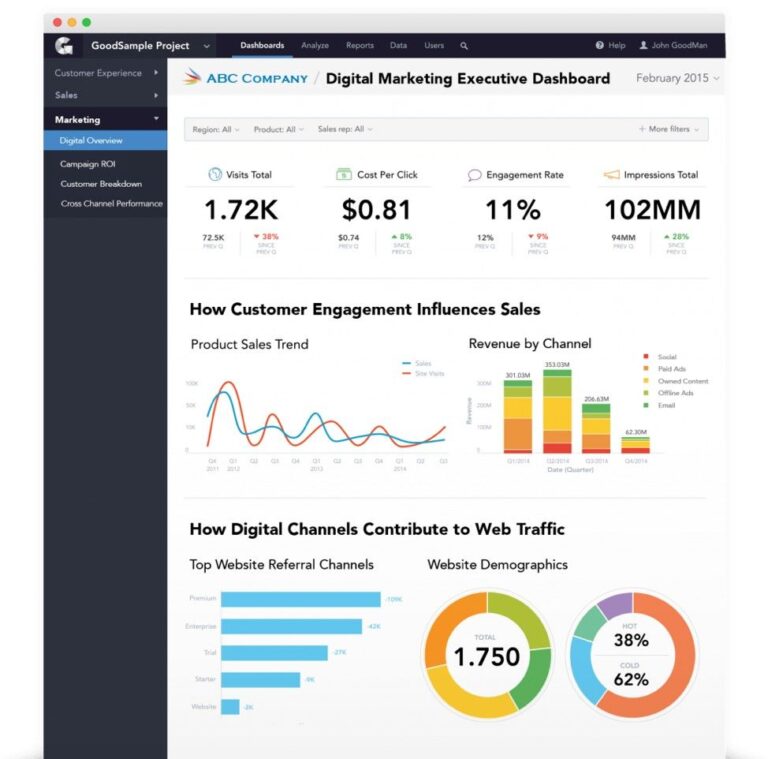
Here’s the practical side of it. You run ads across channels Google, Meta, affiliate networks, programmatic platforms and each campaign is built around a specific action you want the user to take. Behind the scenes, tracking pixels, UTM parameters and attribution tools are quietly logging every move. When a user clicks your ad, lands on your page and buys something, that transaction gets traced back to the exact ad that triggered it.
That’s what makes it so powerful. You can see, down to the rupee, which ad drove which result.
The channels most commonly used in performance marketing include search ads (Google, Bing), paid social (Meta, Instagram, LinkedIn) and programmatic display. Each has its strengths depending on your audience and goal.
The metrics that tell the real story
Numbers don’t lie but they can mislead if you’re looking at the wrong ones. In my experience, the metrics that actually matter in performance marketing are these:
- CPA (Cost Per Acquisition) how much you’re spending for each conversion. This is your north star.
- ROAS (Return on Ad Spend) for every rupee spent, how many rupees came back? Anything above 3x is usually healthy.
- CTR (Click-Through Rate) are people actually engaging with your ads, or ignoring them?
- CVR (Conversion Rate) of the people who clicked, how many followed through? A low CVR usually signals a landing page problem, not an ad problem.
- LTV (Lifetime Value) the most underrated metric. A high CPA is fine if your customers keep coming back.
I’ve seen brands panic over a rising CPA without ever checking their LTV. Once they did, they realized they were actually in great shape. Context matters enormously.
What makes it different from traditional marketing?
Traditional marketing isn’t bad it still has a role in building brand awareness and emotional connection. But it operates on faith. You spend the money, you run the campaign and you hope the needle moves. With performance marketing, you don’t hope. You measure.
The feedback loops are faster too. With traditional channels, you might wait weeks to see any signal. With performance marketing, you can pause a campaign that’s not working by Tuesday morning if it wasn’t delivering by Monday night. That kind of agility changes how you think about marketing budgets entirely.
A few honest things nobody tells you
Performance marketing isn’t magic. It takes time to optimize. The first few weeks of a campaign are often messy you’re testing creatives, refining audiences, adjusting bids. Don’t expect perfection on day one. Give it data, give it room to breathe, and it will reward you.
Also, don’t obsess over a single metric. I’ve seen campaigns that looked terrible on CPA but were building a customer base with incredible repeat purchase rates. Always zoom out before making decisions.
Conclusion
Performance marketing isn’t just a strategy it’s a mindset shift. It’s the decision to stop guessing and start knowing. In a landscape where budgets are tighter and every spend needs to justify itself, this approach gives you something rare: clarity.
Whether you’re a founder running your first ad campaign or a marketing manager trying to make sense of a complicated media mix, performance marketing gives you a framework that’s honest, measurable and genuinely scalable.
Start with one channel. Track everything obsessively. Optimize without emotion. And remember the goal isn’t to run more ads. It’s to run smarter ones.