
I want to tell you about something that really surprised me. I was working with a client who had an online store, and they wanted to grow their business. They gave me their money to spend on ads. I had to make sure it was worth it. I came up with a plan and started running ads on Google and Meta. I want to reach people who are already looking for what my client sells, and also get people who have visited their website to come back. I kept an eye on how the ads were going Live and made changes every day to improve them. I thought I was doing everything right. At the end of the month, I looked at the results. Google said we had 40 sales, which was good. Facebook and Instagram said we had 35 sales, which was even better. Then I looked at my client’s actual sales numbers, and it said we only had 31 sales. That did not match what Google or Facebook was saying. I was confused. Google said 40 sales. Facebook said 35 sales. My client actually only had 31 sales. I realized that both Google Ads and Meta Ads were counting the sales. They were both taking credit for the customers. This was a problem because if I had just looked at the numbers from Google Ads and Meta Ads, I would have thought the ads were doing great. I would have told my client to spend money on Meta Ads because it was working so well. That would have been a mistake. The ads were not the problem. The money we were spending was not the problem. The real problem was attribution model.
The attribution model was lying to me. And I almost believed it.
When you sit down to decide where to put next month’s budget, you’re essentially guessing. Because every platform is taking credit for the same customers, the same conversions, and the same sales you worked hard to earn. This is one of the quietly damaging problems in business advertising today. Almost nobody talks about it honestly. You’re not bad at marketing. Your ads aren’t necessarily failing. The problem is your attribution model. The system that decides which channel, which ad, and which touchpoint gets credit for a sale. Is lying to you. Every wrong decision you make based on that data costs you real money. Let me walk you through exactly what’s going on and how to build an attribution model that actually tells you the truth.
Why Most Business Advertising Attribution Gets It Wrong
Before we fix the problem, let’s be honest about why it exists. Most businesses never question their attribution setup and continue using the platform’s default settings. Almost universally, that default is last-click attribution. Meaning the last ad a customer clicked before buying gets all the credit. Sounds logical on the surface. Here’s the reality. A customer might have seen your Instagram ad three times over two weeks. Then read a blog post on your website. Then I clicked on a Google retargeting ad. Finally bought. Under last click attribution, Google gets all the credit. Instagram gets nothing. Your content team gets nothing. Next month, you cut your Instagram budget because “it’s not converting”. When in reality, it was the spark that started the entire journey.
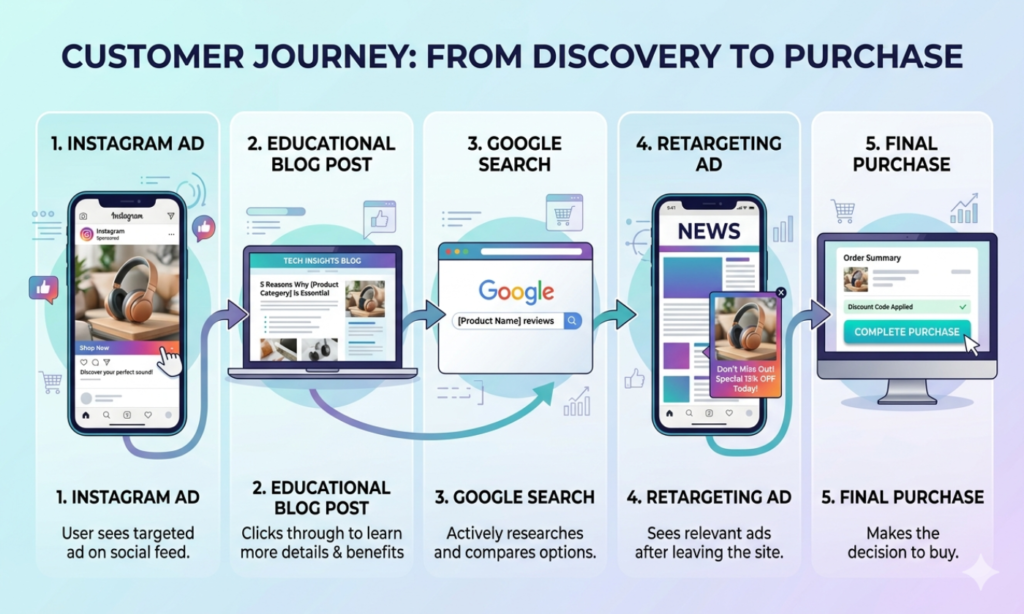
This is why attribution tools show inaccurate results. Not because the tools are broken, but because the model feeding them is fundamentally incomplete. When your decisions are built on incomplete data, your entire business advertising strategy quietly drifts in the wrong direction.
Understand the Full Customer Journey First
Before you build any attribution model, you need to map how your customers actually move from stranger to buyer.
Think about every touchpoint your business has with a customer. A social media post. A Google search ad. A blog they found on their own. An email they opened. A retargeting ad that followed them to YouTube. A friend’s recommendation brought them back.
Most businesses advertise as if every sale is a single-step decision. For the vast majority of purchases. Especially anything over ₹500. Customers go through multiple interactions before they commit.
Your content marketing strategy plays a role here that rarely gets attributed fairly. When someone reads your blog post, watches your explainer video, or follows your page for two weeks before buying. That content touched them. It built trust. It moved them forward. In a last-click world, none of that gets counted.
Start by auditing your customer journey. Interview customers. Ask them how they first heard about you, what made them trust you, and what finally made them buy. The answers will surprise you. They’ll reveal attribution gaps that no dashboard ever will.
Stop Relying on Single Platform Reporting
Here is the truth about every major ad platform. They are all incentivised to claim as much credit as possible. Google wants to show you that Google Ads worked. Meta wants to show you that Meta Ads worked. Both are measuring within their own ecosystem without seeing what the other platform contributed.
This is called attribution overlap. It’s why your combined platform numbers always add up to more conversions than you actually had.
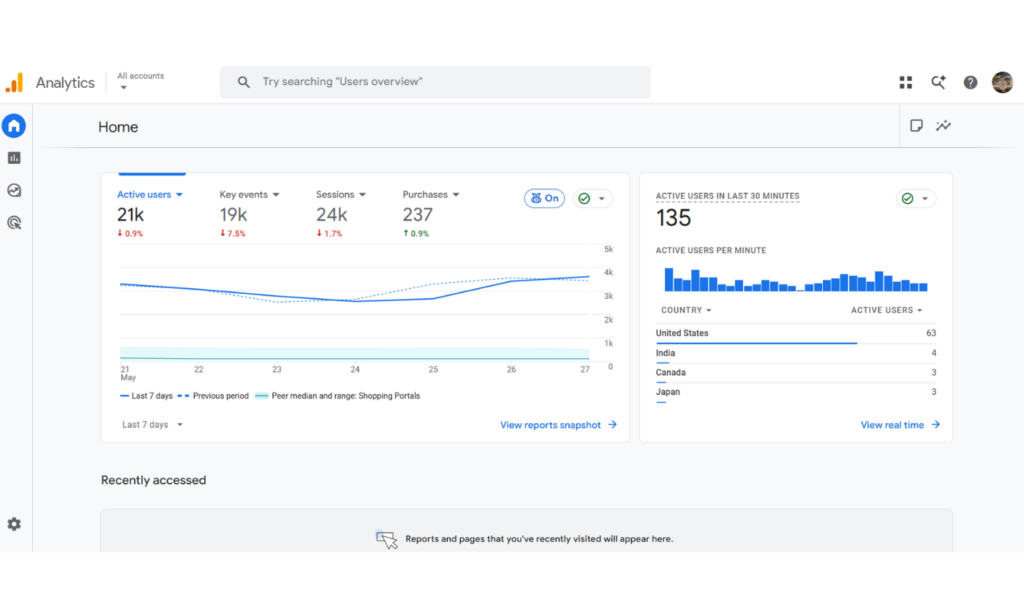
The fix is to move your attribution measurement outside of the platforms themselves. Tools like Google Analytics 4, combined with UTM tracking on every single link you share, give you a more neutral view of what’s actually driving traffic and conversions.
Your performance marketing decisions must be based on platform data. Not what each platform tells you about itself. Set up GA4 properly, tag every campaign link with UTM parameters, and start looking at your data from the customer’s perspective rather than the platform’s perspective.
This single change will immediately make your business advertising decisions more accurate.
Choose the Right Attribution Model for Your Business
Once you have platform data flowing correctly, the next step is choosing a model that fairly distributes credit across the entire customer journey.
Here are the models worth knowing:
Last Click Attribution. All credit goes to the touchpoint. Dangerously misleading for most businesses.
First Click Attribution. All credit goes to the touchpoint. Better for understanding what brings people into your world. Still ignores everything in the middle.
Linear Attribution. Credit is distributed equally across every touchpoint in the journey. More honest than single-touch models. Gives your social media marketing efforts the credit they deserve for building awareness and trust over time.
Time Decay Attribution. More credit goes to touchpoints closer to the conversion. Works well for sales cycles where recent interactions matter most.
Data-Driven Attribution. Uses machine learning to assign credit based on patterns in your conversion data. This is the standard if you have enough volume, and it’s now available in Google Ads and GA4 for most accounts.
For businesses and online stores, linear attribution is a good starting point. This is because it gives credit to every step a customer takes. As your marketing grows and you collect more data, data-driven attribution can help you make better choices. It helps you understand what works and what does not. You can then use this information to improve your marketing. Linear attribution and data-driven attribution are two ways to see how your marketing is doing.
Build Your Simple Attribution Scorecard
Here’s something most attribution guides skip entirely. You don’t need a technical setup to start making better decisions. You need a framework.
Build a monthly scorecard that tracks the following for every channel:
Assisted conversions. How many sales did this channel touch, even if it wasn’t the click
First touch conversions. How many new customers did this channel introduce to your business
Cost per assisted conversion. How efficiently is each channel contributing across the journey
Revenue influenced. Total revenue from customers who interacted with this channel at any point
When you look at your PPC services.Your social campaigns, your email marketing, and your organic content through this lens. Channels that looked like failures under last click attribution suddenly reveal their contribution. Channels that look successful at first glance may actually be benefiting from awareness and trust built by other marketing activities.
Test, Validate, and Trust the Process
Attribution is never perfectly accurate. Accept that upfront. The goal isn’t perfection. It’s true. You want data that’s good enough to make better decisions over time. Not data that’s perfectly precise in every individual case.
One of the underused validation methods is running geo experiments. Turn off advertising in one city or region for a defined period and measure the impact on sales. If sales in that region drop noticeably, your ads were contributing more than attribution was showing. If nothing changes, you were over-crediting that channel.
The Truth About Attribution Nobody Tells You
No attribution model will ever be 100% accurate. Human buying decisions are messy, non-linear, and influenced by dozens of signals that no tool can fully capture. A customer might have heard your business name mentioned in a conversation, seen your logo on a packaging insert, or simply remembered your ad from three months ago.
What good attribution does is give you a better lens through which to make decisions. It shifts you from I think Google is working to I can see that Google closes sales, Instagram starts conversations, and my blog builds trust. So I need all three.
That shift. From guessing to knowing. It’s what turns scattered business advertising spend into a compounding growth engine.
Once you can see your advertising clearly, every rupee you spend starts working harder than it ever did before.
At Carvicreator, we help businesses build data-driven advertising strategies that see the picture. Not just the last click. Ready to understand what’s really driving your conversions? Let’s explore it together.